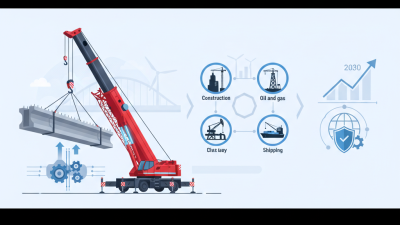
Who Are the Top Rigging and Crane Suppliers in China?

China has a broad manufacturing base for lifting equipment, from wire-rope slings and shackles to mobile cranes and overhead systems. Yet a supplier’s location alone says little about product quality or service. Buyers comparing rigging and crane suppliers should look beyond catalog photos and headline prices. They need clear specifications, traceable test documents, suitable production capacity, and responsive technical support.

This guide introduces leading Chinese suppliers and explains what buyers should examine before requesting a quotation. It considers product range, manufacturing experience, quality-control practices, customization, export support, and the availability of replacement parts. Details matter. A crane’s rated capacity, operating environment, and duty cycle can change which manufacturer is a practical fit. So can sling material, connection type, and required inspection records. No single company is best for every project, and published claims deserve careful checking.

The comparisons are a starting point, not a substitute for technical review. Ask suppliers for current certificates, drawings, inspection procedures, and references relevant to your application. Confirm that quotations describe the same configuration and delivery scope. Small differences can affect cost and suitability. This is easy to overlook. Supplier information may also change, so verify key details directly before making a decision. The aim is a more informed shortlist, grounded in documented capabilities rather than confident marketing alone.

Who Are the Top Rigging and Crane Suppliers in China?

Define the Sector: Cranes, Hoists, Slings, and Rigging Hardware

China’s rigging and crane supply sector covers more than large lifting machines. Cranes handle vertical movement across factories, ports, warehouses, and construction sites. Hoists provide controlled lifting for smaller or suspended loads. Slings connect the load to lifting equipment and may use wire rope, chain, or synthetic webbing.

Rigging hardware completes the connection system. Shackles, hooks, master links, turnbuckles, and lifting points must match the load, angle, and working environment. Experienced suppliers should provide clear specifications, load ratings, inspection records, and material information. Factory visits and sample checks can reveal details that brochures often hide. Weld quality, coating thickness, labeling, and packaging matter in daily use. I have seen a strong-looking component fail a basic documentation review. That is an uncomfortable, but useful warning.

Tips: Ask for traceable test reports, not vague promises. Confirm working load limits under actual lifting angles. Check whether replacement parts are available locally. Review inspection routines before comparing prices. A low quote can become expensive after delays, missing certificates, or poor after-sales support. Suppliers with engineering teams can help select compatible cranes, hoists, slings, and hardware. Still, their advice should be checked against the site’s lifting plan and equipment conditions. Mistakes happen. Good suppliers make them easier to detect.


China's Rigging and Crane Supply Sector: Typical Design Factors

The sector includes cranes and hoists for lifting and positioning loads, plus slings and rigging hardware for load connection. The chart compares commonly specified minimum design factors for major sling categories under ASME B30.9 practices. A design factor of 5 means the minimum breaking strength is five times the rated working load limit; actual requirements may vary by standard, material, configuration, and application.

Map Major Chinese Suppliers by Product Type and Market Role

China’s rigging and crane supply base is best mapped by product type and market role. Wire-rope sling makers serve factories, ports, and construction sites. Hardware suppliers provide shackles, hooks, swivels, and lifting beams. Their value depends on traceability, load testing, and replacement speed.

Crane manufacturers occupy a broader role. They supply bridge cranes, gantry cranes, hoists, and custom lifting systems. Engineering integrators connect equipment with installation, controls, inspection, and maintenance. Rental and service companies support shutdowns, shipyards, and temporary projects. The China Construction Machinery Industry Association reported continued demand for lifting equipment across infrastructure and manufacturing sectors in its recent industry statistics. Meanwhile, the International Trade Centre and national customs data show China remains a major exporter of machinery and metal lifting components. Market forecasts from Research and Markets also identify Asia-Pacific as a leading crane-growth region. Data helps, but it does not replace site checks.

Tips: Match the supplier to the job. Ask for factory test records, material certificates, rated-load charts, and service coverage. Verify whether the quoted capacity includes the lifting angle. Small details matter. A 60-degree sling angle can increase leg tension sharply. Supplier lists can also mislead. Some firms manufacture core equipment, while others only integrate imported or outsourced parts. I would inspect production records, audit calibration practices, and request references from similar sites. No catalogue can fully prove field reliability.

Compare Crane Options by Rated Load, Span, and Duty Classification

A useful comparison of Chinese rigging and crane suppliers starts with rated load, not the largest number in a brochure. Check whether the figure applies to the complete crane or a specific lifting arrangement. A 10-tonne rating does not mean every lift can safely reach 10 tonnes. Hooks, slings, lifting beams, and the load’s position all matter. Ask for load charts and technical documents, then compare them with your heaviest routine lift.

Span affects both fit and performance. Measure the distance between runway rails, and check available headroom against the building’s beams, lights, and pipes. A longer span may suit a wide workshop, but it can change structural requirements and operating behavior. Duty classification matters too. It reflects how often the crane runs and how demanding its work is. A crane used for occasional maintenance has different needs from one moving steel coils every shift. These details are easy to overlook; I have seen layout assumptions create avoidable delays.

Tips: Give suppliers your rated load, span, lift height, daily operating hours, and expected starts per hour. Request the proposed duty classification and explain any peak loads. Compare like with like. If operating data is incomplete, say so and ask the supplier to identify its assumptions. That may feel less tidy, but it makes the quote more useful.

Assess Crane Design Against GB/T 3811-2008 and GB/T 14406-2011

When comparing China’s rigging and crane suppliers, treat GB/T 3811-2008 and GB/T 14406-2011 as design checks, not marketing badges. GB/T 3811 sets crane design rules; GB/T 14406 covers general-purpose overhead travelling cranes. Ask for the design basis, rated load, duty classification, load combinations, and supporting calculations. Check that the proposed configuration matches the actual lifting cycle, not merely the headline capacity.

Look closely at fatigue assumptions, brakes, limit devices, structural welds, and inspection access. A drawing may show a neat beam, yet hide awkward maintenance points or poor cable routing. Request material traceability and inspection records, then compare key dimensions with the approved drawings. For slings and other rigging accessories, verify their own applicable standards and records; the two crane standards do not certify every accessory. Small details matter. Paperwork can still miss them.

The International Labour Organization’s 2023 report, A Call for Safer and Healthier Working Environments, estimates 2.93 million work-related deaths and 395 million non-fatal work injuries worldwide each year. Those figures are not crane-specific, but they underline why design review should include operating limits and foreseeable misuse. Ask suppliers to explain assumptions in plain language, and have a qualified engineer review calculations against the intended site conditions. I would not accept a certificate alone. A second review may catch what the first missed.

Who Are the Top Rigging and Crane Suppliers in China? - Assess Crane Design Against GB/T 3811-2008 and GB/T 14406-2011

Supplier-neutral technical assessment matrix for comparing rigging and crane suppliers. No company or brand rankings are implied.

Assessment area What to check Relevant standard / scope Objective evidence to request Assessment outcome
Crane design basis Confirm the design specification identifies the crane type, rated capacity, span, lifting height, operating environment, duty conditions, and applicable design assumptions. GB/T 3811-2008 provides design rules for cranes, including design conditions and calculations. Project design basis, approved technical specification, design calculations, and a list of applicable standards and editions. Verify against project requirements
Structural strength and stability Check that the design addresses the applicable load combinations, structural strength, stiffness, stability, and fatigue considerations for the stated service conditions. GB/T 3811-2008; detailed requirements depend on crane type, duty, and design assumptions. Structural calculation report, load-combination basis, drawings, material specifications, and calculation review records. Pass / revise / not evidenced
General-purpose overhead travelling crane requirements For a general-purpose overhead travelling crane, verify that the proposed configuration and technical requirements are within the intended product scope of the cited standard. GB/T 14406-2011 applies to general-purpose overhead travelling cranes; it should not automatically be treated as the governing product standard for every crane type. Equipment classification, general arrangement drawing, technical data sheet, and a clause-by-clause compliance statement for applicable requirements. Applicable only where scope matches
Hoisting and travel mechanisms Review the selected hoisting, trolley, and bridge travel arrangements, including rated loads, operating speeds, braking, and design suitability for the specified duty. Design assessment under GB/T 3811-2008; product-specific requirements should also be checked against the applicable crane standard. Mechanism calculations, motor and brake data, drive arrangement drawings, component specifications, and maintenance instructions. Compare with duty and specification
Rigging and lifting accessories Check that each sling, shackle, hook, or other accessory is identified with its rated capacity and is suitable for the load, lifting arrangement, and operating conditions. Crane design standards do not replace the applicable requirements for individual rigging accessories. Accessory specifications, traceable inspection or test records where applicable, identification markings, and safe-use instructions. Check each accessory separately
Electrical and control systems Review control mode, protective functions, limit devices, emergency stopping arrangements, and electrical documentation against the project specification and applicable requirements. Confirm applicable electrical and safety standards in addition to the crane design and product standards. Electrical schematics, control-system description, component data, functional test records, and operating instructions. Documented functional verification
Manufacturing quality and traceability Assess whether manufacturing records can be linked to the supplied equipment and whether inspection and non-conformance processes are documented. Supplier quality controls support conformity but do not, by themselves, demonstrate compliance with GB/T 3811 or GB/T 14406. Inspection and test plan, material and component records, weld inspection records where specified, calibration records, and corrective-action process. Review records and traceability
Testing and handover Confirm that factory and commissioning checks are defined for the supplied crane and that acceptance criteria are agreed before testing. GB/T 14406-2011 includes requirements for general-purpose overhead travelling cranes; verify the applicable test provisions for the selected equipment and contract. Test plan, inspection reports, agreed acceptance criteria, commissioning records, operating manual, and maintenance schedule. Accept only with agreed records
Service and technical support Compare the proposed availability of spare parts, technical documentation, training, maintenance guidance, and response arrangements. Commercial and service criteria; these are not a substitute for design or product-standard compliance. Service scope, spare-parts list, training plan, warranty terms, and documented support process. Evaluate against site needs

Edition check: This matrix references the editions named in the title. Before procurement or conformity assessment, confirm the current applicable editions, amendments, product scope, and any mandatory requirements with the relevant standards authority and project stakeholders.

Check Wire-Rope Rigging Practices Against GB/T 5972-2016

When comparing rigging and crane suppliers in China, look beyond product descriptions. Ask how they inspect, maintain, and document crane wire ropes. GB/T 5972-2016 sets out guidance for wire-rope care, inspection, and discard criteria. It is a practical reference, not a substitute for competent inspection.

A careful check begins with the rope’s full length, including sections hidden on the drum. Inspect for broken wires, corrosion, kinks, crushing, and birdcaging. Check the rope’s seating on sheaves and drums, plus end connections and lubrication. Record the location and extent of visible damage, then assess it against the standard’s discard criteria. Do not rely on a quick glance. Some defects are easy to miss.

Suppliers should be able to provide rope identification, inspection records, and clear maintenance instructions. Ask who performs inspections and how findings are tracked over time. Conditions matter: dust, moisture, heavy use, and poor storage can change a rope’s condition quickly. A checklist helps, but it can still miss damage between inspection points. That deserves attention. Verify that the rope and its intended crane application are assessed by qualified personnel, and confirm which edition and requirements apply to the equipment.