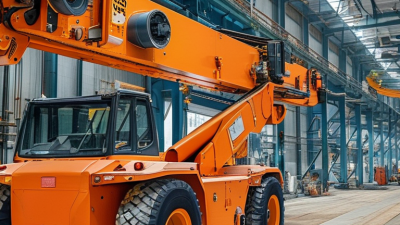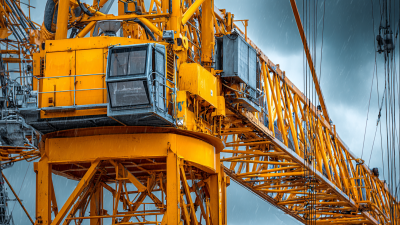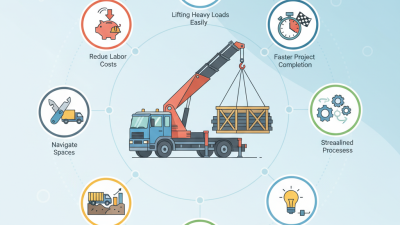
Iowa’s lifting landscape is shaped by wide farm fields, expanding manufacturing plants, changing weather, and demanding construction schedules. For global buyers, choosing an iowa crane requires more than comparing lifting capacity. Ground conditions, transport distance, boom reach, maintenance access, operator training, and replacement parts can change the real cost of ownership. A crane that performs well on a flat Iowa site may struggle on soft soil, narrow streets, or winter surfaces.
Mike Parnell, a widely recognized crane and rigging educator, has said, “A safe lift begins long before the crane moves.” That principle guides this overview. The following ten crane types are examined through practical buying questions, including where each machine works best, what limitations deserve attention, and how buyers can evaluate suppliers. Mobile cranes offer flexibility. Crawler cranes provide strong stability on demanding ground. Tower cranes support vertical construction, while overhead and gantry cranes serve controlled industrial environments. Rough-terrain and truck-mounted models add useful mobility, but neither fits every project.
Details matter.
A careful buyer should review load charts, inspection records, wind limits, service coverage, and documented training. Local expertise also matters because Iowa conditions are not uniform. A rural bridge project, a warehouse floor, and a grain-handling facility may require very different equipment. Some selections will remain debatable, especially when price competes with long-term reliability. That uncertainty is useful. It encourages buyers to question assumptions, verify specifications, and seek qualified engineering advice before approving a lift plan.
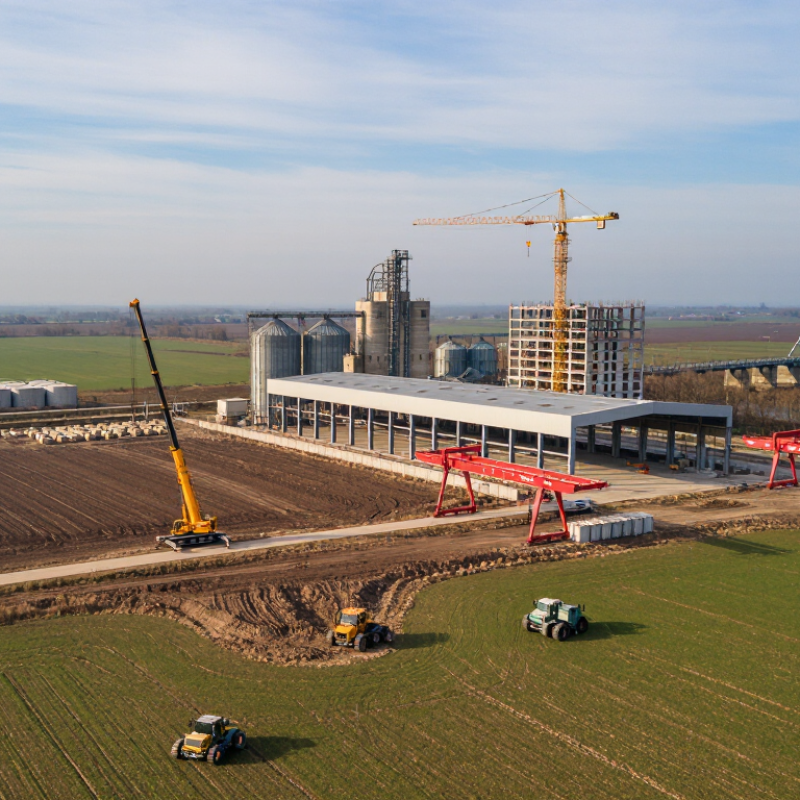
Top 10 Types of Cranes in Iowa for Global Buyers
Iowa crane selection starts with classification, not appearance. Buyers should compare overhead, gantry, jib, monorail, tower, mobile, crawler, truck-mounted, rough-terrain, and all-terrain cranes. Each type serves a different lifting environment. An overhead crane suits factories with fixed lifting paths. A gantry crane works well in open yards. Jib cranes support localized workstation handling. Mobile cranes offer flexibility across construction sites.
Iowa conditions require careful evaluation. Winter temperatures, wind, ice, and uneven ground can affect safe crane operation. Check rated capacity, lifting height, working radius, duty cycle, and foundation requirements. A crawler crane provides stability on difficult ground, while a rough-terrain crane handles prepared outdoor surfaces. Tower cranes fit tall projects, but they need detailed assembly planning and wind controls.
Global buyers should request load charts, inspection records, material certificates, manuals, and service histories. Confirm electrical specifications, metric measurements, transport dimensions, and local compliance expectations before purchase. An experienced engineer should review the heaviest load and the most frequent lift. Do not size equipment only for average loads. That mistake becomes expensive. A perfect selection is rare. Recheck assumptions. Weather data, operator skill, site access, and future expansion may change the final decision.
| Rank | Crane Type | Primary Classification | Typical Rated Capacity* | Mobility or Installation | Typical Iowa Applications | Key Selection Criteria |
|---|---|---|---|---|---|---|
| 1 | Truck-Mounted Mobile Crane | Mobile hydraulic crane mounted on a commercial truck carrier | Approximately 10–300 metric tonnes | Roadable; outriggers provide stability at the worksite | Bridge work, utility construction, industrial maintenance, precast placement, and general construction | Travel distance, load chart at required radius, outrigger footprint, road regulations, wind limits, and setup surface |
| 2 | Rough-Terrain Crane | Self-propelled hydraulic mobile crane for uneven or unfinished ground | Approximately 10–150 metric tonnes | Four-wheel drive and four-wheel steering; normally transported between sites | Rural infrastructure, wind-energy construction, commercial foundations, agricultural facilities, and industrial sites | Ground bearing pressure, mud and snow conditions, gradeability, tire configuration, lifting radius, and outrigger leveling |
| 3 | All-Terrain Crane | Roadable mobile crane combining highway travel and off-road capability | Approximately 30–1,200 metric tonnes | Highway-capable chassis with telescopic boom and hydraulic outriggers | Large industrial lifts, power projects, refinery work, wind-turbine components, and major civil construction | Maximum load moment, transportation permits, bridge limits, counterweight logistics, wind exposure, and site access |
| 4 | Crawler Crane | Lattice- or telescopic-boom crane mounted on crawler tracks | Approximately 40–600+ metric tonnes | Moves on tracks and can travel with limited loads; commonly assembled on site | Heavy civil construction, bridge erection, industrial modules, wind projects, and long-radius lifts | Soil bearing capacity, crane mats, boom configuration, assembly area, transport sections, and required lift radius |
| 5 | Tower Crane | Fixed or climbing crane with a vertical mast and horizontal or luffing jib | Approximately 5–20 metric tonnes | Anchored or supported on a foundation; height can increase as construction progresses | High-rise buildings, dense urban projects, stadiums, hospitals, and large commercial developments | Required hook height, jib radius, coverage area, foundation design, tie-in requirements, wind limits, and erection access |
| 6 | Overhead Bridge Crane | Indoor crane supported by parallel runway beams with a traveling bridge | Approximately 1–50 metric tonnes; heavier systems are engineered for special facilities | Fixed runway system; electric hoist and trolley move along the bridge | Manufacturing plants, agricultural equipment facilities, warehouses, repair shops, and process buildings | Building span, runway length, headroom, duty cycle, power supply, load frequency, floor clearance, and maintenance access |
| 7 | Gantry Crane | Bridge crane supported by legs that run on ground-level rails or wheels | Approximately 1–100+ metric tonnes | Indoor or outdoor; can be fixed, rubber-tired, or rail-mounted | Precast yards, steel fabrication, rail and bridge projects, container handling, and outdoor maintenance areas | Runway condition, span, lift height, outdoor weather exposure, wind restraint, ground flatness, and relocation needs |
| 8 | Jib Crane | Fixed or mobile crane using a horizontal, articulating, or wall-mounted jib | Approximately 0.25–20 metric tonnes | Column-, wall-, foundation-, or portable-base mounted | Machine loading, maintenance bays, fabrication cells, assembly lines, and localized material handling | Required rotation, outreach, mounting structure, headroom, duty cycle, floor or wall strength, and load-handling frequency |
| 9 | Carry-Deck Crane | Compact, self-propelled industrial crane with a rotating boom and four-wheel chassis | Approximately 1–15 metric tonnes | Compact and maneuverable; intended mainly for prepared indoor or outdoor surfaces | Plant maintenance, HVAC installation, equipment positioning, construction interiors, and confined industrial sites | Overall width, turning radius, floor loading, low-clearance access, lift height, battery or fuel options, and surface condition |
| 10 | Knuckle-Boom Loader Crane | Articulating hydraulic crane installed on a truck or specialized carrier | Approximately 1–50 metric tonnes, depending on boom configuration | Truck-mounted; can load, transport, and unload materials without a separate crane carrier | Utility work, roofing materials, concrete products, lumber delivery, municipal maintenance, and farm construction | Payload and lift combination, truck axle ratings, stabilizer spread, reach, unloading location, road access, and material density |
*Capacity figures are typical industry ranges rather than guaranteed working capacities. Actual capacity depends on the manufacturer’s load chart, boom or jib configuration, lifting radius, counterweight, ground conditions, wind, attachments, and applicable safety requirements.