How to Choose ERW Pipe Suppliers in 2026?
Choosing an ERW Pipe supplier in 2026 is not just a price comparison. It is a decision about consistency, traceability, and whether a supplier can deliver the same quality across repeated orders. A polished brochure helps, but it cannot show how a pipe performs after welding, coating, transport, and installation. Ask for mill test certificates, applicable product standards, dimensional tolerances, and clear records linking each batch to its production details. Ask for proof. Then check whether the documents match the pipe.
A guiding line from fictional composite specialist Elena Ward is: “A reliable supplier makes quality visible, not merely promised.” This is an illustrative quote, not a verified statement from a real expert. Use it as a reminder to look beyond claims. Compare weld inspection practices, testing equipment, production capacity, lead times, and responses to nonconformities. If a supplier cannot explain how it controls wall thickness or checks weld integrity, pause and ask for specifics. Small details matter. So does the answer’s clarity.
This guide examines practical ways to assess ERW Pipe suppliers, from technical documentation to sample evaluation and after-sales support. It also considers warning signs, questions to ask during factory audits, and how to compare quotations without overlooking hidden costs. No checklist catches everything; supplier selection still involves judgment. A low price may be reasonable, or it may signal a trade-off worth investigating. Look for evidence, verify important claims, and choose a partner whose process is as dependable as its promises.
Define Project Requirements and ERW Pipe Specifications
Define Project Requirements and ERW Pipe Specifications
Before comparing ERW pipe suppliers, write down how the pipe will be used. A water line, structural frame, and low-pressure process system may require different grades and checks. Record the fluid or load, operating pressure, temperature range, and installation environment. Include the required outside diameter, wall thickness, length, and quantity. Small omissions matter. A missing wall-thickness tolerance can complicate fit-up on site.
Specify the material grade and the applicable product standard, then confirm what documentation and inspection the project requires. Depending on the application, this may include dimensional checks, weld-seam inspection, mechanical tests, or material test certificates. State whether pipe ends must be plain, beveled, or threaded, and identify any coating requirements. Be precise about acceptance criteria. “Good quality” is not a measurable specification. I have seen teams leave details until procurement, and that can create avoidable delays; it is worth reviewing the list with the design or site engineer.
Tips: Send suppliers one clear specification sheet, not scattered notes. Ask them to identify any deviations in writing. Check that quoted tolerances, test records, and delivery lengths match your requirements. If a detail is uncertain, flag it for technical review rather than guessing.
Verify Supplier Certifications, Capacity, and Quality Systems
How to Choose ERW Pipe Suppliers in 2026?
A supplier’s certificate matters only when its scope matches your order. Check the issuing body, validity dates, production site, and covered pipe grades. Ask whether the certificate applies to ERW production, not only general management. Then compare stated capacity with shift schedules, line speeds, and recent delivery records. A polished brochure is not evidence. Request a realistic production plan for your diameter, wall thickness, and quantity.
Quality systems should leave a clear trail from steel coil to finished pipe. Ask for sample heat or batch records, dimensional inspection results, weld checks, and non-destructive testing reports where specified. Confirm how the supplier handles out-of-tolerance pipes and corrective actions. If possible, review records during a site visit and observe how operators identify material on the shop floor. Paperwork can look complete while missing a recently changed process. That detail is easy to overlook.
Tips: Match every certificate to the actual factory and product. Ask for a sample inspection pack before placing an order. Check capacity against your delivery window, not annual claims alone. Keep questions specific. A checklist helps, but it cannot replace sound judgement.
How to Choose ERW Pipe Suppliers in 2026
Suggested evaluation framework: verify certifications, production capacity, and quality controls before making a supplier decision.
Suggested buyer-defined scoring weights, not an industry standard: check that certifications are current and applicable to the product and market; confirm capacity against your order volume and schedule; and review quality procedures, traceability, and test records. Adjust the weights to fit your project.
Review Material Traceability, Testing, and Compliance Records
When choosing ERW pipe suppliers in 2026, ask for traceability from steel coil to finished pipe. The World Steel Association’s World Steel in Figures 2024 reports 1,892.2 million tonnes of crude steel production in 2023. That scale makes clear why a pipe’s origin should be documented, not assumed. Ask whether each pipe bundle links to a coil or heat number, production date, and inspection record. Paper can look perfect.
Review the mill test certificate against the purchase specification. Check that chemistry, tensile strength, dimensions, and grade match the order. Then trace a sample pipe’s markings back to its certificate. Look for documented weld-seam inspection, hydrostatic or other specified pressure testing, and calibration records for the equipment used. A test result without a clear link to the pipe is weak evidence. ISO 9001:2015 also emphasizes identification, traceability, and control of documented information.
Ask for the applicable product standard and the supplier’s records of nonconformities and corrective actions. Confirm whether tests were performed on the delivered lot, rather than on a different production run. A missing page may be an honest filing mistake, but it still needs resolving before acceptance. I would not treat a polished certificate as proof on its own; cross-check markings, quantities, dates, and test values. That takes time. It can reveal small inconsistencies before they become costly field problems.
Compare Pricing, Lead Times, Delivery, and Support
A low ERW pipe price can look attractive until freight, inspection, and packaging charges appear. Ask suppliers to quote the same grade, outside diameter, wall thickness, length, tolerance, and quantity. Compare the delivered cost per tonne, and ask which items are excluded. That comparison is imperfect. Request a written breakdown for testing, protective end caps, and export packing. Small gaps add up. If one offer is far below the others, verify material traceability and test documentation before treating it as a saving.
Lead time should mean more than a production estimate. Ask whether the schedule begins after deposit, drawing approval, or material confirmation. A promised ship date is not an arrival date. Check whether production, inspection, booking, and transit are included, then request milestone dates. Delivery quality matters too: confirm bundle labels, loading photos, destination handling, and how shortages or transit damage are reported. Support is easiest to judge before an order. Note response times, document turnaround, and the escalation route; request sample mill certificates and packing lists. Dates can shift. Leave a realistic buffer, even when the schedule looks comfortable.
Assess Supplier Reliability Through Audits and References
How to Choose ERW Pipe Suppliers in 2026?
Assess Supplier Reliability Through Audits and References
The World Steel Association’s World Steel in Figures 2025 reports global crude steel production of 1,882.6 million tonnes in 2024. That scale makes documented controls essential, but the figure says nothing about an individual pipe mill’s reliability. Verify claims on site. Trace a sample pipe from its heat number and coil records through forming, welding, inspection, and shipment.
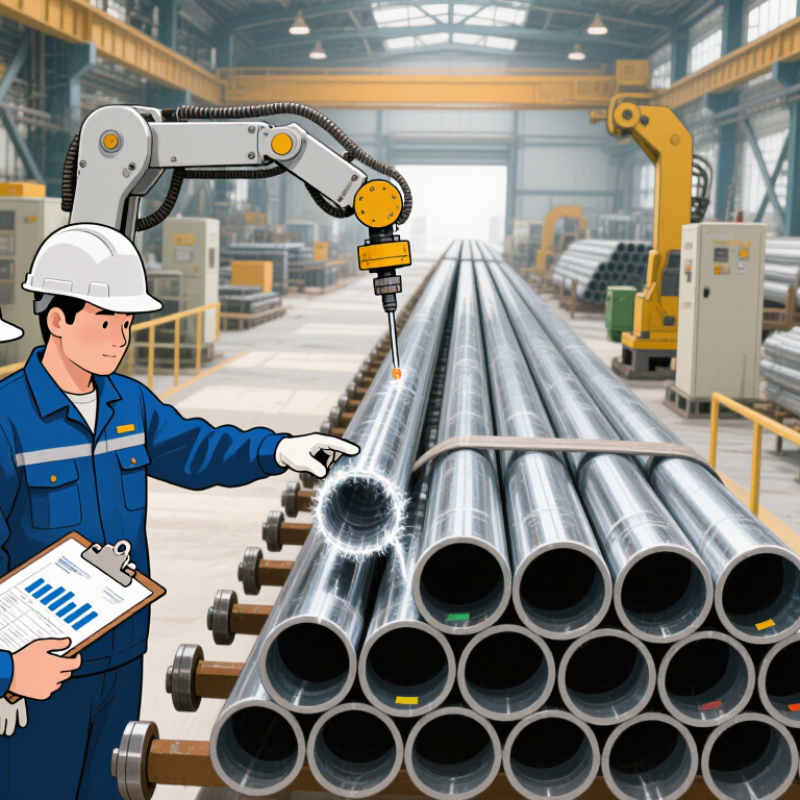
During an audit, observe the ERW welding line rather than reviewing procedures alone. Check weld-seam inspection records, non-destructive testing equipment, calibration dates, hydrostatic test logs, and dimensional checks. Ask operators how they handle a failed test or a change in production settings. Small details matter. A paper-perfect audit can still miss a rushed night shift; that limitation deserves attention. ISO 19011:2018 offers guidance for auditing management systems, including evidence-based, impartial audit practices.
References should match your order’s pipe grade, diameter, wall thickness, and delivery conditions. Request two recent customer contacts, then ask about consistency, corrective-action response, and repeat orders—not just on-time delivery. Compare their comments with anonymized inspection records and shipment documents. Call directly. If a reference cannot discuss a specific issue, that is not proof of poor performance, but it is a reason to seek more evidence.