What Is the Best 350 Ton Hydraulic Crane in 2026?
Choosing the best 350 ton hydraulic crane in 2026 is not a contest of maximum capacity alone. Real projects expose weaknesses quickly: soft ground, narrow access, long boom configuration, wind, transport limits, and changing lift radii. A crane may promise 350 tons, yet its usable capacity can fall sharply at distance.
Mike Veres, president of ALL Family of Companies, has said, “The right crane is the one that safely and efficiently performs the lift.” That principle remains useful, although it sounds simpler than the work itself. A serious comparison must examine load charts, hydraulic stability, counterweight options, boom length, operator visibility, fuel use, and service support. Small details matter.
Field experience also changes the answer. A compact urban site may favor one manufacturer, while a bridge project needs another. Liebherr, Tadano, Demag, and XCMG each approach mobility, controls, and maintenance differently. There is no universal winner.
The best choice depends on evidence.
This guide compares leading 350 ton hydraulic crane models through practical questions, not marketing language. Can the crane reach the required radius without excessive configuration changes? Does the manufacturer provide dependable parts and trained technicians? Can operators understand the control system during a demanding lift?
Some specifications look impressive but lack context. That is where buyers can make expensive mistakes. We will also consider purchase price, rental value, transport planning, digital monitoring, and long-term reliability. The final ranking may not satisfy every project manager. That is intentional. A stronger decision begins by admitting that “best” is always site-specific.
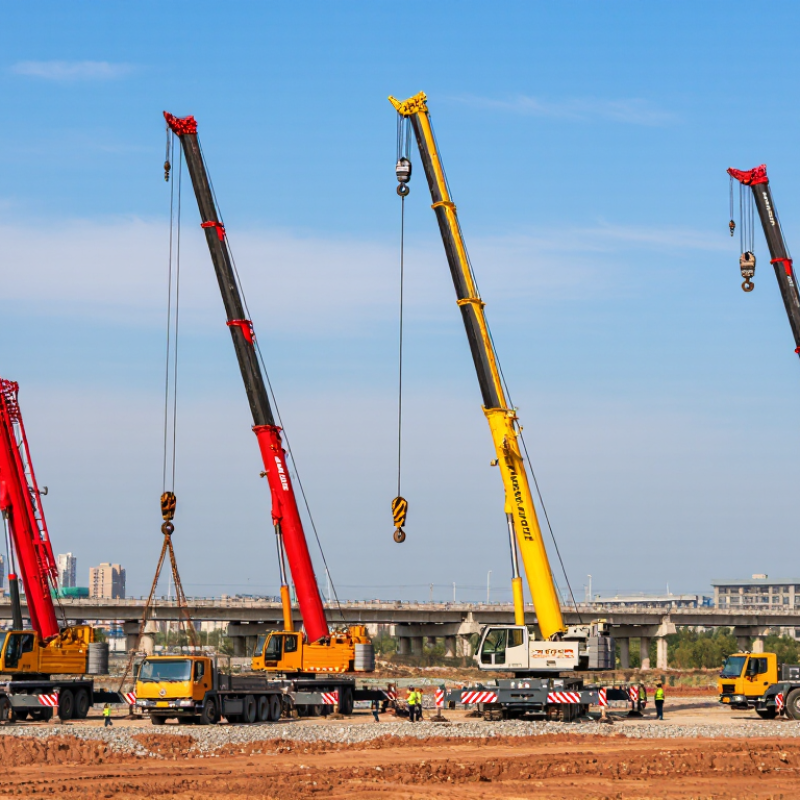
What Defines a 350-Ton Hydraulic Crane in 2026
What Is the Best 350 Ton Hydraulic Crane in 2026?
A 350-ton hydraulic crane is defined by more than its headline capacity. The rating usually applies at a specific radius, boom length, and configuration. At 350 tons, the load chart becomes the real authority. A crane may lift that weight only near its base. Capacity can fall sharply at a 20-meter radius.
Modern designs combine high-pressure hydraulics, electronic load monitoring, and telescopic or lattice boom systems. Smooth control matters when a steel vessel moves above a crowded work area. The operator needs clear pressure readings, accurate angle sensors, and dependable emergency controls. Small display errors can create serious decisions.
Ground conditions also define performance. A heavy crane may require large steel mats or engineered foundations. Counterweight selection affects both lifting power and transport planning. Road limits, setup space, wind speed, and assembly time should be checked before delivery. These details are less impressive than tonnage, but they often decide whether a lift works.
A reliable evaluation uses current load charts, inspection records, and maintenance history. Independent verification is valuable. Rated capacity alone can mislead. In practice, the “best” crane may be the one that matches the radius, site, and lifting cycle most accurately. Some projects still overestimate their needs. That increases cost without improving control. A careful review should question the original lift plan, not simply accept its largest number.
Key Performance Specifications and Lifting Capabilities
What Is the Best 350 Ton Hydraulic Crane in 2026?
A 350-ton hydraulic crane is not a 350-ton solution at every radius. Its rated capacity usually applies near the crane’s centerline, with a short boom and heavy counterweight. At a 20-meter working radius, capacity may fall sharply. The load chart matters more than the headline number.
Typical 350-ton mobile configurations use a main boom between 18 and 84 meters. A luffing jib can extend working height beyond 100 meters, depending on configuration. Counterweights may exceed 100 tonnes, while axle loads often require special transport planning. These figures align with capacity ranges reported in the 2025 Global Mobile Crane Market Outlook by Research and Markets. However, that report focuses mainly on market demand, not real project performance.
EN 13000 requires rated-capacity indicators, stability controls, and tested load charts for mobile cranes. ISO 4305 also supports stability verification through calculated tipping loads and working radii. In field use, wind is often the uncomfortable variable. A 350-ton crane may lift a 120-ton vessel section safely at a short radius, yet struggle with a lighter load farther away. Ground bearing pressure, outrigger spread, boom deflection, and reeving choice change the result.
My practical concern is simple: published maximum capacity can encourage poor comparisons. The best 350-ton crane is the one whose chart still provides margin at the actual radius, height, wind limit, and site condition.
Leading 350-Ton Hydraulic Crane Models Compared
When comparing leading 350-ton hydraulic crane models in 2026, configuration matters more than the headline capacity. A heavy all-terrain model offers road mobility and faster deployment between prepared sites. Its hydraulic suspension helps on uneven access roads, but setup still demands firm ground and accurate outrigger leveling. A crawler-based model usually provides stronger stability on large construction sites. It can lift heavy loads at longer working radii, although transport requires more planning, trailers, and assembly time.
A compact counterweight design may suit urban projects with restricted space. It can reduce transport demands, but the lifting chart may decline sharply as radius increases. For example, a crane rated at 350 tons near the base cannot deliver that capacity at 20 meters. The load moment changes quickly. Operators should examine boom length, counterweight options, wind limits, and ground pressure before choosing a model. Small details matter.
In practical comparisons, I would score each model across mobility, setup time, chart performance, fuel use, and operator visibility. Digital load monitoring improves control, yet sensors do not replace experienced judgment. I once focused too heavily on maximum capacity and overlooked rear swing clearance. That was a useful mistake. Buyers should request verified load charts, maintenance records, inspection data, and service support before committing. A crane that looks powerful on paper may lose efficiency when access, soil, or transport restrictions become real.
How to Choose the Best 350-Ton Hydraulic Crane for Your Needs
What Is the Best 350 Ton Hydraulic Crane in 2026?
How to Choose the Best 350-Ton Hydraulic Crane for Your Needs
Choosing a 350-ton hydraulic crane starts with the lift, not the machine’s headline capacity. A crane rated for 350 tons may achieve that figure only at a short radius, with a specific boom arrangement and full counterweight. Check the load chart carefully. Record the load weight, lifting radius, hook height, and required clearance before comparing equipment.
Ground conditions can change the decision. A fully configured crane may create heavy pressure beneath each outrigger. Ask for verified ground-bearing data, then plan mats or engineered support where needed. Measure the access route, turning space, bridge limits, and setup area. A perfect crane is useless if transport vehicles cannot reach the worksite. Shorter setup time also matters when traffic control or urban access limits the working window.
Review hydraulic response, operator visibility, control accuracy, and maintenance access during a practical inspection. Test the crane’s movements under controlled conditions, especially fine slewing and load placement. Inspect hoses, cylinders, pins, safety systems, and service records. Independent inspection and qualified lift planning add valuable confidence. I have seen teams focus too heavily on maximum capacity and overlook wind exposure or poor visibility. That mistake is easy to repeat. The best choice is the configuration that safely handles the real load, site limits, schedule, and available expertise.